

This post was originally published on this site.
Chanel has agreed to acquire Charvet, the Paris-based, family-run shirtmaker, turning a runway collaboration into an investment in specialist craft under artistic director Matthieu Blazy.
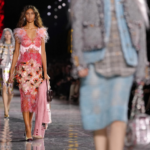
The acquisition follows Charvet’s development of a trio of shirts for Blazy’s debut Chanel show in October 2025.
Yet the relationship between Charvet and Chanel goes back much further. Just under 100 years ago, Coco Chanel was borrowing the Charvet shirts of her then-boyfriend, British shipping merchant and polo player Boy Capel. Former Creative Director of Chanel, Karl Lagerfeld, was also a fan of the brand, continuing the legacy.
Following the latest collaboration with Blazy, the Colbans, who had been seeking a succession plan for their family business, felt they had found a long-term partner in Chanel.
Bruno Pavlovsky, Chanel’s fashion president, said: “Charvet is a beautiful jewel. Now there’s work to be done to set it up for its next steps.”
Charvet’s heritage and independence
Charvet, based at Place Vendôme in Paris, has operated as an independent, family-run business across generations. It was founded as the world’s first dedicated shirt shop in 1838, by the son of Napoleon’s dresser, Joseph-Christophe Charvet.
Its reputation as a specialist craft maker has been built since then, with patrons including King Edward VII, who even awarded the shirtmaker a royal warrant, a rare honour for a non-British brand.
Loyal customers have also included John F. Kennedy, David Hockney and film maker Sofia Coppola.
The business remained within the family until 1965, when it was sold to the owner of Charvet’s fabric supplier, Denis Colban. The brand is now run by Colban’s children, Jean-Claude and his sister Anne-Marie.
Today, with the children of both siblings working in other fields, the question of succession created an opening for a buyer with both the resources and the creative alignment to preserve the business.
Charvet has estimated revenues of €10-15 million (£8.6-12.9 million) a year, Luca Solca, a luxury analyst at Bernstein, told the New York Times. Its assets include 100 employees, an atelier outside Paris and one store, the building on Place Vendôme, which Chanel has also acquired.
According to Chanel, Charvet will remain an independent company, with the Colban’s staying on for at least one more year to ensure a smooth transition of ownership.
Chanel’s upstream investment pattern
The Charvet deal is part of a wider round of supplier takeovers at Chanel. For the year ended 31 December 2025, the house posted revenue of $19.3 billion, 2% higher than the previous year, while operating profit came in at $4.7 billion.
During 2025, Chanel said it put more than $700 million into buying long-standing suppliers to secure “the finest materials and craftsmanship”.
Chanel’s CFO Philippe Blondiaux said in May that the house “continued to invest in the future of our brand and our people” through its broader creative ecosystem, alongside record-level capital expenditure on real estate and boutique openings.
The Charvet acquisition is likely modest in financial terms relative to Chanel’s scale, but it adds to the house’s vertical integration in specialist craft categories. By bringing shirtmaking expertise in-house, Chanel gains direct control over a production capability that proved its value on Blazy’s runway.
Blazy’s tenure has generated visible commercial results. His autumn/winter 2026 show at the Grand Palais in March drew reports of editors and buyers queueing for hours at Chanel’s Paris boutiques to secure pieces from his early collections.
Positive performance in ready-to-wear and the reception of the Chanel 25 handbag campaign contributed to the house’s 2025 growth.